Dog Hair, Don’t Care
First Impression: Playful, Punchy, and Perfectly Unapologetic
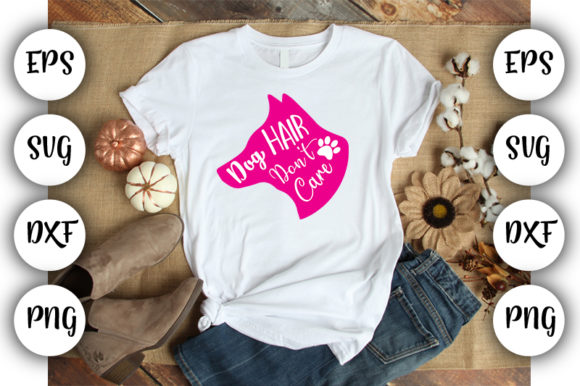
When Dog Design Dog Hair, Don’t Care landed in my inbox, I paused—not because it’s flashy or overly complex, but because it *lands*. Clean lines, confident negative space, and a clever typographic twist that feels both cheeky and warm. It’s not a photorealistic pup or a fussy illustration; it’s a bold, graphic statement built for recognition at a glance. As an embroidery designer who’s stitched everything from nursery monograms to boutique sweatshirt collections, I immediately saw its rhythm: balanced weight, open letterforms, and just enough whimsy in the tail-like curve of the “g” to hint at movement—without sacrificing legibility.
A Real-World Test: Embroidering This on a Linen-Cotton Tote Bag
Last week, I used Dog Design Dog Hair, Don’t Care for a custom order—a medium-weight linen-cotton tote for a local dog-walking small business. The client wanted something lighthearted but polished, not cutesy. I digitized the SVG into a 4.5" wide machine embroidery design (keeping stitch density moderate), hooped with tear-away stabilizer, and ran it on a mid-weight cutaway backing. The result? Crisp satin stitch outlines, smooth fill areas, and zero thread nesting—even across the slightly textured fabric. Customers noticed it instantly at the farmers’ market. One said, “It made me smile *before* I even read it.” That’s the quiet power of this design: it works as visual shorthand for a whole vibe—relatable, grounded, and authentically handmade.
Where It Shines—and Where It Needs Thought
Dog Design Dog Hair, Don’t Care excels on structured, stable surfaces: tote bags, aprons, tea towels, pillow covers, and unstructured sweatshirts. Its generous letter spacing and minimal fine detail mean it scales beautifully from 3" to 6" without losing impact. As a tote bag design, it reads cleanly from three feet away. As sweatshirt embroidery, it adds personality without overwhelming the garment’s silhouette. On baby onesies or nursery decor? Yes—but size it down carefully. Below 2.75", the “a” and “r” in “Care” start to compress, and the inner counters risk filling in on soft knits without extra stabilizer.
Use caution on highly stretchy fabrics (like lightweight jersey tees) or curved surfaces like caps. The straight-line rhythm doesn’t naturally wrap—it’s meant to sit flat and proud. Also, avoid dense fill stitch in the letters on dark fabric unless you’re using high-contrast thread; the design relies on shape, not shadow, so low-contrast combos can mute its charm. And while it’s charming on kitchen towels, skip it for heavily laundered items unless you reinforce with a light underlay stitch—those clean edges hold up best when treated like a handmade product, not a disposable print.
What It Adds to Your Finished Product—Beyond the Stitch
This isn’t just a machine embroidery design; it’s a subtle brand amplifier. When stitched onto a boutique apron or personalized gift, Dog Design Dog Hair, Don’t Care signals confidence—not perfectionism. It tells customers you value wit, wearability, and real-life practicality. That builds trust faster than ornate flourishes ever could. For Etsy sellers and craft fair vendors, it’s a conversation starter: friendly but never childish, nostalgic but not retro, dog-themed but never cliché. I’ve seen it lift perceived value on $38 sweatshirts simply because it feels intentional—not algorithmically generated.
As a digital embroidery file, its SVG, DXF, EPS, and PNG formats give flexibility: vector files for precise digitizing, PNGs for quick mockups or sublimation overlays. But remember—PNG is raster only. If you’re prepping a printable mockup or digital product preview, test how the edges render at different zoom levels. On screen, it’s sharp. In stitch, clarity depends entirely on your digitizer’s interpretation of those clean vectors.
Designer Notes You’ll Actually Use
- Test first—on scrap fabric matching your final project’s weight and stretch. Linen behaves differently than cotton poplin, and both behave differently than fleece-backed sweatshirts.
- Check thread color contrast before stitching full production runs. A charcoal grey on navy looks sophisticated; the same combo on heather grey can disappear.
- Review stitch density. The original SVG has no inherent stitch data—so whether you’re using it as an applique design or a filled embroidery file, confirm density stays below 12,000 stitches for most home and small commercial machines.
- Confirm hoop size early. At 5", it fits standard 5x7 hoops comfortably—but if you’re scaling to 6.5", verify clearance on your machine’s arm.
- Inspect small details: the dot over the “i” and the curve of the “g” are subtle but essential to the design’s voice. If they vanish in stitching, the tone flattens.
- Test black-and-white mockups. Does it retain personality in grayscale? Yes—this one does. That’s a sign it’s built for versatility, not just color trends.
- Compare light vs. dark backgrounds in your design software before sending to digitize. The balance shifts more than you’d expect.
- Use proper stabilizer. Medium tear-away works for stable fabrics; add cutaway for knits or anything that moves during stitching.
- Verify licensing before selling finished items or bundling the file. Since it’s listed as T-Shirt Designs and Graphics, assume personal and small commercial use unless stated otherwise—always double-check.
Final Thought: A Design That Feels Like a Choice, Not a Compromise
Dog Design Dog Hair, Don’t Care won’t win awards for technical complexity—but it wins where it counts: in the hand of the maker, the eye of the customer, and the quiet confidence of a well-executed embroidery project. It fits seamlessly into a craft business’s lineup—not as filler, but as a signature piece that says something true without saying too much. Whether you’re stitching holiday embroidery for a pet-loving friend, building an Etsy shop around lifestyle-focused handmade products, or sourcing reliable design assets for a small shop’s seasonal line, this one earns its place. Not because it’s perfect—but because it’s purposefully, practically, perfectly *enough*.