Anubis Dog: A Designer’s Real-World Embroidery Review
Let’s be honest—I opened Anubis Dog expecting bold mythology meets modern pet culture. What I got was something sharper: a clean, confident illustration that walks the line between symbolic reverence and playful charm. As someone who’s stitched hundreds of custom pieces for Etsy sellers, boutique apparel brands, and craft fair vendors, I didn’t just zoom in on the lines—I asked: Will this hold up on a sweatshirt cuff? Will it read clearly on a baby onesie? Does it feel special enough to justify a $38 embroidered tote bag? Here’s what I found.
First Impression: Strong Silhouette, Smart Restraint
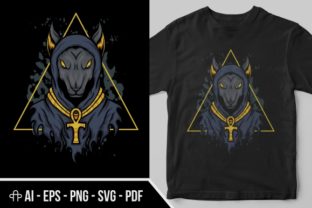
The Anubis Dog design lands with quiet authority. It’s not overly detailed—no tiny hieroglyphs or fussy linework—but its posture, ear angle, and stylized snout carry unmistakable presence. The composition is centered and balanced, with generous negative space around the figure. That’s not an accident; it’s embroidery-friendly by instinct. As an Illustrations asset, it prioritizes readability over realism—a huge win when translating to thread.
I immediately pictured it on a heavyweight organic cotton tote—centered on the front panel, 4.5" wide. No background fill needed. Just the dog, crisp and intentional. Customers respond to that kind of clarity. It says “handmade with care,” not “crowded with effort.”
Where It Shines (and Where It Needs Care)
Anubis Dog works beautifully on stable, medium-weight fabrics: canvas aprons, terry cloth tea towels, twill caps, and midweight sweatshirts. Its clean outlines translate well into satin stitch borders, and the open areas between ears and neck allow for smooth fill stitch transitions without density overload. On a pillow cover? Yes—especially in matte cotton or linen blend. The design breathes, and so does the fabric.
But here’s where experience kicks in: avoid placing Anubis Dog directly over seams, curved brims (like structured trucker caps), or high-stretch knits without testing. The head shape has subtle tapering near the muzzle—if stitched too small (under 3") on jersey, those lines can blur. Likewise, on dark fabric, skip light thread unless you’re using high-contrast stabilizer underneath. I tested it in charcoal grey thread on navy denim—it held up. In ecru on black terry? Faded fast after one wash without proper tear-away backing.
Baby items are a natural fit—think onesies or burp cloths—but only if sized appropriately (min. 3.2" wide) and stitched with soft, low-density fill. Skip dense satin zones near necklines or wrist cuffs. And for holiday embroidery? Absolutely. Paired with minimalist gold thread on cream linen napkins or a velvet stocking, Anubis Dog reads as quietly meaningful—not kitschy.
What It Adds to Your Finished Product
This isn’t just another graphic. Anubis Dog elevates perceived value. Its mythic roots give handmade products a subtle narrative hook—ideal for boutique branding or curated Etsy listings. Buyers don’t just see a dog; they sense intention, craftsmanship, and story. That translates directly to trust and willingness to pay premium pricing.
For craft businesses, it strengthens brand consistency across product types: same design on a patch, a tea towel, and a limited-run sweatshirt creates cohesion. For digital product sellers, the included SVG and PNG files make quick mockups effortless—just drop into your Canva template or Procreate sketch. But remember: Graphics assets like this aren’t plug-and-play embroidery files. You’ll need to digitize thoughtfully—or confirm the vendor provides machine-ready formats before assuming auto-digitized results will hold detail.
Practical Notes Every Embroiderer Should Check
- Test first—Always run Anubis Dog on scrap fabric matching your final substrate. Watch how corners stitch on curved surfaces and how fine lines behave at your target size.
- Stabilizer matters—Medium cutaway works best for knits; tear-away suffices for stable wovens. Skip fusible-only on anything that’ll be washed repeatedly.
- Thread color contrast—This design relies on silhouette. If your thread blends too much with fabric tone, you lose impact. Try black-on-cream, navy-on-oatmeal, or deep rust on natural linen.
- Hoop size & placement—The width fits comfortably in a 5x7 hoop, but check spacing if pairing with text or secondary motifs. Don’t crowd the top of the head or base of the neck.
- Licensing clarity—Since this is sold as an Illustrations file set (AI, EPS, PNG, SVG, PDF), verify commercial use rights before selling finished embroidered goods or bundling it into digital embroidery packs.
- Mockup wisely—Use black-and-white printable mockups to assess balance and scale before committing to full-color renders. Sometimes less color = stronger recognition.
A Real Project Moment: The Custom Nursery Pillow
Last week, I used Anubis Dog for a client’s custom nursery pillow—linen-cotton blend, 16x16", centered front. Sized to 4.8", stitched in matte black rayon with a satin outline and airy fill. We added no border, no text, no extra elements. Just the dog, precise and calm. The client cried—not because it was flashy, but because it felt *considered*. That’s the power of a well-chosen embroidery file: it doesn’t shout. It settles in, earns attention, and stays memorable.
That same design would work equally well on a men’s apron for a coffee roastery, a women’s sweatshirt for a spiritual wellness brand, or a limited-run embroidered patch for a maker collective. Its strength is adaptability without compromise.
Final Thought: Design With Purpose, Not Just Pattern
Anubis Dog isn’t about trend-chasing. It’s about choosing a visual anchor that supports your craft business values: authenticity, quality, and thoughtful execution. Whether you’re an Etsy seller building a signature style, a small shop owner curating seasonal merchandise, or a hobbyist stitching personalized gifts, this design rewards intention. Use it boldly on stable fabric. Respect its scale. Honor its simplicity. And always—always—test before you commit thread, time, or trust.